
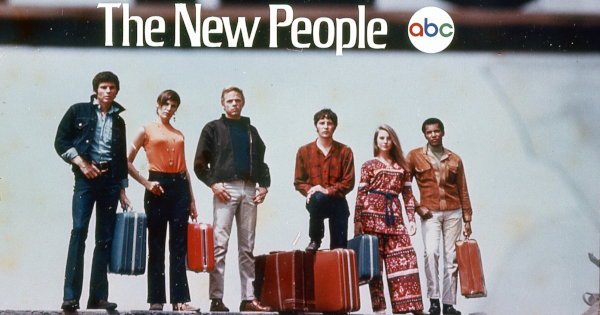
ABC introduced a new Monday night lineup during the fall of 1969. It included a 45-minute drama called The New People about a group of college students stranded on an island who try create their own society. Cancelled after only 17 episodes, the series left a lasting impression on those who watched it.
ABC Revamps Its Monday Line-Up
When ABC announced its 1969-1970 schedule in early March of 1969, its entire Monday line-up had been canceled. Gone were The Avengers (an import from Britain), Peyton Place (which had been cut back to one half-hour episode a week in February of 1969), The Outcasts and The Big Valley. In their place were four new programs: The Music Scene, The New People, The Survivors and Love, American Style.
Both The Music Scene and The New People were forty-five minutes in length, which ABC hoped would prevent viewers from switching over to other networks [1]. In total, ABC added 12 new shows to its schedule, in place of 12 shows that it cancelled. The network, which had ended the 1968-1969 season in third place with an average 15.6 Nielsen rating, had high hopes for its new programming, its Monday line-up, and the 1969-1970 season as a whole [2].
The Music Scene was a musical-variety show with a rotating stable of hosts that showcased contemporary rock and pop acts. The Survivors (its full title was Harold Robbins’ The Survivors) was an ambitious novel-for-television starring Lana Turner and George Hamilton, based on a concept written by novelist Harold Robbins. Love, American Style was an anthology series focusing on romance stories.
And The New People? An ABC press release proclaimed:
“It is today, this time, this decade. But for a stranded group of young people on a remote island in the South Pacific, it is the Year One. Theirs, by a sudden thrust of circumstance, is a New World. Can they create a better one?” [3]
All four programs were part of ABC’s “program balance” that combined shows catered to younger audiences with “older” skewing programs like The Lawrence Welk Show [4]. The network was actively courting “the 16 to 35 [or] 40-year-old market,” according to American Broadcast Companies, Inc. president Leonard H. Goldenson, who explained that “most of these people are young parents, most of them are large families [5].
During an ABC affiliates convention in May 1969, Elton Rule, president of ABC-TV, stated that the network was looking to win time periods “one by one, day by day, time period by time period” [6]. Stressing its prospects for Monday, the network explained the unusual 45-minute running lengths of The Music Scene and The New People as an attempt to counter the “almost automatic inclination” of viewers to watch NBC’s Rowan and Martin’s Laugh-In from 8-9PM on Monday nights [7].
The Music Scene, running from 7:30-8:15PM, would be followed by a three-second station break and then a “powerful action tease” for The New People that would transition viewers from one show to the other, bypassing entirely Rowan and Martin’s Laugh-In [8]. Or so ABC hoped.
All Eyes On Monday
Broadcasting magazine called ABC’s Monday line-up the network’s “crap shoot, the big gamble, the go-for-broke night,” with everything resting on The Survivors [9]. Both The Music Scene and The New People were, for all intents and purposes, written off in the face of NBC’s Laugh-In and CBS’s Here’s Lucy. Love, American Style was likewise given little chance of succeeding.
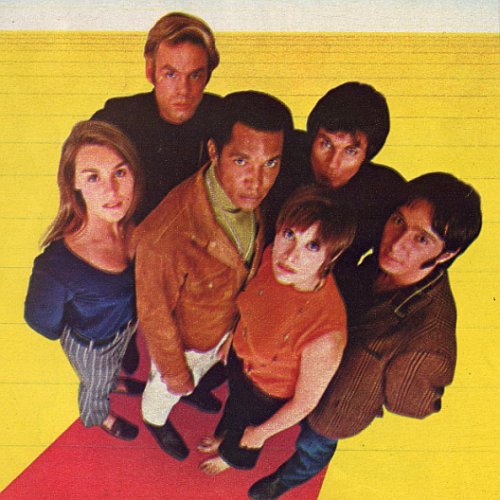
Copyright © TV Guide, 1969 [1]
All four programs were originally scheduled to premiere on Monday, September 22nd, 1969. In late August, however, ABC decided to hold The Survivors and Love, American Style until the following week due to increased competition from NBC [10]. The network didn’t want to risk diluting the premieres of The Survivors and Love, American Style.
Obviously, ABC was expecting a lot from its Monday programs, which were expensive to produce but also relatively expensive for advertisers. The per-minute price for advertisements in The New People was $43,000, tied with Love, American Style, while The Music Scene was at a slightly lower $42,000 and The Survivors a higher $49,000 [11]. By comparison, ABC’s returning Mod Squad rose from $38,000 to $46,000, an indication of its ratings strength. The highest price seen for fall 1969 was $65,000 — for NBC’s Laugh-In, CBS’s Mission: Impossible and Mayberry RFD, also on CBS.
About The New People
The premise of The New People was a simple one. A group of roughly forty American college students were on a cultural exchange tour in Southeast Asia, sponsored by the State Department. The tour was cancelled because the students were too radical and outspoken and the State Department ordered them back to the United States. While flying home, their plane met encountered a severe storm and crashed on an island somewhere in the South Pacific. The following day, the “new people” began to explore.
The survivors soon learned the name of the island: Bomano, an unused Atomic Energy Commission (AEC) testing site. An entire town had been built on the island, complete with food, weapons and other supplies. There were, however, no people (aside from creepy test dummies) and chances of rescue were slim. The plane’s radio had been destroyed in the crash and, more importantly, nobody had any idea where they were — let alone how to contact help.
Killed in the plane crash were the pilots and several of the students. The only surviving adult was Mr. Hannichek (played by Richard Kiley) a mortally wounded State Department official who did his best to maintain order. During the first episode, a racist student gleefully smothers a signal fire just as a rescue plan is flying over in order to trap an African-American student on the island forever, not realizing he is also stranding himself and everyone else. That rescue plane would report the island clear and no additional planes would be sent out.
Hannichek uses what little strength he has left to stop a mob from killing the racist student and then dies. His death leaves the students alone on the island, forced to fend for themselves without the experience and advice of adults, yet eager to create a society free of the problems that had plagued the one they left behind.
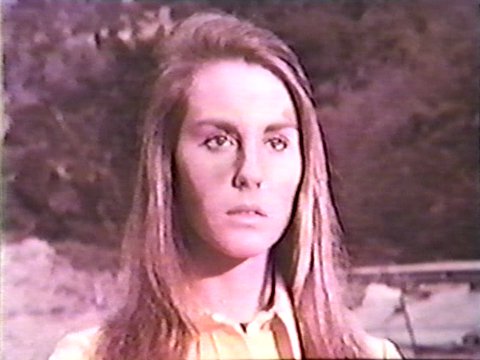
Of the forty students who took part in the exchange tour, only six were regularly featured. Among them were Stanley Gabriel (played by Dennis Olivieri), Ginny Loomis (played by Jill Jaress) and George Potter (played by Peter Ratray), who was once a ruthless marine, now a pacifist and the unofficial and sometimes protested leader of the new people. Rounding out the main cast were Susan Bradley (played by Tiffany Bolling), the disenfranchised daughter of a senator, Gene “Bones” Washington (David Moses) a man of color unable to foresee a better world for himself, and Robert “Bob” Lee (Zooey Hall), a loner and a Southerner.
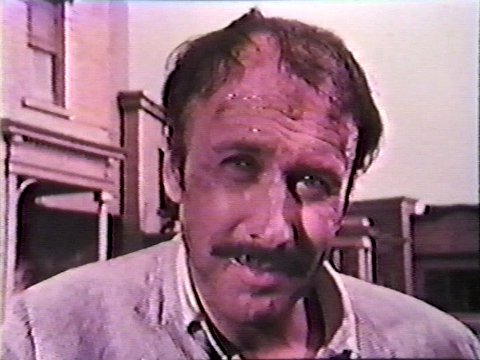
Several other supporting characters were featured in numerous episodes, including Jack, Laura and Sally (played by Clive Clerk, Elizabeth Berger and Elaine Princi). For the most part, the characters were stereotypical: there was the brainless football player, the outspoken female, the African-American sick of being treated unfairly, and the stoic Marine with feelings, the only level head of the group.
Throughout the series, the “new people” attempted to set up, and keep going, their new and hopefully better, civilization. They dealt with death, pregnancy, sexism, racism, drugs and violence. Episodes ranged fighting about building a shower for the women to a murder casting a shadow over the new society.
A two-part episode aired in late November and early December involved power dynamics between the sexes: while one woman tries to keep a domineering man from forcing her to marry her, another accuses one of the men of rape. Problems with racism and sexism continually plagued the survivors — and brought up questions of law and societal respect again and again.
Critical Response
Television critics were split in their reviews of The New People, either hating it or suggesting that it needed work to succeed. Kay Gardella of The New York Daily News fell into the first camp, calling the series “preachy,” while Paul Molloy of The Chicago Sun-Times wrote that he “found the premiere a total bore” [12]. Morton Moss of The Los Angeles Herald-Examiner suggested the series “was loaded with slogans and abstractions masquerading as flesh-and-blood,” while The San Francisco Examiner‘s Dwight Newton wrote that “the series seems to be as stranded as its young people.”
On the other hand, Terrence O’Flaherty of The San Francisco Chronicle called The New People the “most fascinating program idea of the new season” but warned that the “characters will need to display more humor and honor.” Likewise, Jack Gould of The New York Times noted that series “began with many cliche contrivances but has an interesting potential” [13]. Russ Marabito of Family Today predicted that “if future episode match it [the pilot] ABC will have a winner,” and Percy Shain of The Boston Globe wrote that the show had “a viewing momentum that should make it popular, particularly among the young.”
The Chicago Tribune‘s Clarence Peterson, after opining that Richard Kiley gave “what must have been the longest death scene in television history,” summed up his feelings on the future of the series:
“So there they are–the spectrum of youth in America–all alone with plenty of food and shelter and even a piano, and presumably they’ll find some guitars around somewhere, and in the weeks to come they will find out what a society run by and for the younger generation will actually be like. That is, they will find out that script writers are very clever, very much in tune with what the younger generation thinks and feels, and, of course, clairvoyant.” [14]
In a survey of the new television season in early October, Jack Gould seemed to agree with Petersen’s contention that the series was perhaps trying to hard to reflect the reality of contemporary youth. He noted, after seeing the second episode, that The New People “has yet to sort itself out; it could be genuine drama but has the earmarks of older people trying to think the way the young think” [15].
The New People A Dud In The Nielsens
Due to their unusual run lengths, preliminary ratings breakdowns for both The New People and The Music Scene combined the last fifteen minutes of The Music Scene (from 8-8:15PM) with the first fifteen minutes of The New People (from 8:15-8:30PM). Thus, the best measure upon which to base comparisons between The New People and its competition was the last half-hour of the show, aired from 8:30-9PM.
Preliminary Nielsen ratings for New York City gave ABC a third-place ranking for the evening of Monday, September 22nd, when The Music Scene and The New People premiered. During the 7:30-8PM half-hour, The Music Scene drew a 10.4/19 rating, compared to a 14.9/26 rating for Gunsmoke on CBS and a 19.3/34 rating for My World and Welcome to It on NBC [16]. The 8-8:30PM half-hour saw ABC drop to a 10.0/16 rating, while Gunsmoke dipped slightly to a 14.8/23 for CBS and Rowan and Martin’s Laugh-In surged to a huge 26.3/41 for NBC [17].
The last half-hour of The New People rose to a 10.7/15 rating, while CBS fell to an 11.9/17 with Here’s Lucy and NBC grew to a 30.9/43 with Laugh-In [18]. While the New York Nielsens only represented a fraction of the total audience, a poor showing in that city indicated that viewers across the country were not interested in The New People. The following week, the last half-hour of The New People improved to an 11.9/17 rating, although still a distant third behind CBS and NBC [19].
“Fast” national Nielsens for the week of September 22nd through September 29th saw the premieres of both The Music Scene and The New People rating below a 14.0; NBC, however, saw its entire Monday line-up for that week (Rowan and Martin’s Laugh-In and its two specials featuring Bob Hope and Flip Wilson) make the top ten [20]. National ratings for the following week saw The Survivors and Love, American Style premiered to 14.2 and 12.2 ratings, respectively [21].
All four of ABC’s Monday programs were in the bottom third of the Nielsen ratings for the week October 6th through October 13th (when the third episode of The New People was broadcast) along with six additional ABC shows [22]. In light of these disappointing performances, ABC announced in early November that it was canceling The Music Scene and The New People and moving The Survivors and Love, American Style [23].
The network would fill its Monday schedule with It Takes a Thief and The ABC Monday Night Movie (formerly The ABC Wednesday Night Movie). The final broadcast of The New People took place on January 12th, 1970. For ABC, the Monday makeover worked: ratings for January 19th saw the network jump almost seven points from the previous week, although it still placed third for the evening [24].
A total of seventeen episodes of The New People were aired. The final episode did little to conclude the series; it involved the survivors arguing over whether or not they should try to signal a ship sighted on the horizon. An earlier episode had involved several of the students trying to build a raft to escape the island — but they never did.
Rod Serling’s Involvement
It’s not clear how involved Rod Serling was in the creation and development of The New People. In a January 1969 article about programs in development for ABC, Broadcasting referred to the series as “Rod Serling’s The New People, being produced by Thomas-Spelling Productions” [25]. Both The New York Times and The Chicago Tribune, writing about ABC’s 1969-1970 schedule, stated that The New People was created by Rod Serling [26, 27].
Clarence Petersen of The Chicago Tribune, in his review of the first episode of the series, stated the first script had been written by Rod Serling [28]. However, writing credit for the first episode as broadcast is given to John Phillips. According to the closing credits The New People was “Developed For Television By” Rod Serling. Which was it? Did Serling develop the concept for television or actually write the pilot script?
In a March 1969 interview with Cecil Smith of The Los Angeles Times, Serling was asked about The New People. “That’s Aaron Spelling’s show,” Serling explained. “He brought me the idea and I wrote the pilot script. Beyond that, I have nothing to do with it. The show is somewhere between Gilligan’s Island and San Francisco State. It may work. But not with me” [29]. Later, in July 1970, Serling spoke with Jerry Buck of The Associated Press, telling him that his pilot script for The New People was “carved up like beef” [30].
In September 2012, the UCLA Film & Television Archive screened an unaired 51-minute version of the pilot episode as part of a Rod Serling retrospective. This version of the pilot gave Serling written by credit, suggesting that after ABC cut The New People from a 60-minute series to a 45-minute series, in the process “butchering” Serling’s script, he wanted nothing more to do with it [31].
The Theme Song
George Romanis served as composer for The New People but he did not write the theme song. Earle Hagen wrote the theme (titled “The New People”), which was performed by The First Edition. Earlier versions of this article contained inaccurate information about the theme song. You can learn more about how I confused the opening theme song with the closing theme song here.
The broadcast version of the pilot episode, which is the only episode of The New People circulating among private collectors, doesn’t include an opening credit sequence so there’s no theme song. Fortunately, someone recorded the opening theme song using a reel-to-reel tape recorder back in 1969. Unfortunately, the quality is very poor:
Opening Theme Song Lyrics
The New People,
Starting out alone.
Far away from home and friends.
They’re young people,
Young but still aware.
Young but old enough to care.
What kind of world will they create?
Facing the problems of man.
Thousands of years haven’t solved them,
Yet all of them think they can.
The New People,
Starting from day one.
And for each of them,
Time has just begun.
The New People.
The New People.
The same person who recorded the opening theme song also recorded the closing theme song. Again, the quality is very poor:
Closing Theme Song Lyrics
The New People,
Starting out alone.
What kind of world will they create?
Facing the problems of man.
Thousands of years haven’t solved them,
Yet all of them think they can.
The New People,
Starting from day one,
And for each of them,
Time has just begun.
The broadcast version of the pilot features a slightly longer closing theme song:
Closing Theme Song Lyrics (Broadcast Pilot)
The New People,
Starting out alone.
Far away from home and friends.
What kind of world will they create?
Facing the problems of man.
Thousands of years haven’t solved them,
Yet all of them think they can.
The New People,
Starting from day one,
And for each of them,
Time has just begun.
Tie-In Novel & Comics
Despite its brief run on television, The New People produced both a tie-in novel from Tempo Books and two tie-in comic books from Dell Publishing. The tie-in novel was titled The New People: They Came From The Sea and was published in September 1969. Written by prolific TV tie-in novelist William John under the pseudonym Alex Steele, the novel involves the survivors battling a hoard of poisonous crab-like creatures that descend on the island.
The first comic tie-in was published in January 1970; the second in May 1970. Both were likely on newsstands a few months before their cover dates. Each comic contains two original stories. They were later reprinted in Mexico in 1971 through publisher Organización Editorial Novaro as part of the TV Mundial (Worldwide TV) title.
Works Cited:
2 For the period September 23rd, 1968 through April 20th, 1969, ABC averaged a 15.6 rating, compared to a 20.3 for CBS and a 20.0 for NBC, according to an article in the May 5th, 1969 issue of Broadcasting magazine (page 9).
3 Cray, Douglas W. “A.B.C., TV’s Question Mark, Pins Much on New Season.” New York Times. 21 Sep. 1969: F1.
4 Ibid.
5 Ibid.
6 “A gung-ho ABC pitch to TV affiliates.” Broadcasting. 2 Jun. 1969: 26-27.
7 Ibid.
8 Ibid.
9 “Next season’s make-or-break shows.” Broadcasting. 18 Aug. 1969: 38-42.
10 “Staying away from specials.” Broadcasting. 25 Aug. 1969: 9.
11 All figures from “The asking price of network minutes.” Broadcasting. 10 Mar. 1969: 30-34.
12 All review excerpts, except where noted, quoted in “A second look at the new season.” Broadcasting. 29 Sep. 1969: 59-60.
13 Gould, Jack. “TV Review.” New York Times. 23 Sep. 1969: 95.
14 Petersen, Clarence. “TV Today: Bob Hope Special Too Bland to Be Funny.” Chicago Tribune. 23 Sep. 1969: B15.
15 Gould, Jack. “Please, Dear Mets, Don’t Go Away.” New York Times. 5 Oct. 1969: D21.
16 “Ratings race goes into first turn.” Broadcasting. 29 Sep. 1969: 59-60.
17 Ibid.
18 Ibid.
19 “Advantage of an early start.” Broadcasting. 6 Oct. 1969: 18-19.
20 “NBC-TV clings to Nielsen lead.” Broadcasting. 13 Oct. 1969: 46-47.
21 “CBS still second in National Nielsens.” Broadcasting. 20 Oct. 1969: 83.
22 “CBS takes lead in fast Nielsens.” Broadcasting. 27 Oct. 1969: 70-71.
23 Ferretti, Fred. “A.B.C.-TV Shuffling Programs in Ratings Bid.” New York Times. 8 Nov. 1969: 67.
24 “New shows help ABC boost ratings.” Broadcasting. 26 Jan. 1970: 83.
25 “ABC whistles ‘no money worries’ tune.” Broadcasting. 20 Jan 1969: 59-60.
26 Gent, George. “A.B.C. Plans to Replace 12 TV Programs in Fall.” New York Times. 1 Mar. 1969: 63.
27 Gowran, Clay. “TV Today: Fall Shows Over ABC Are Told.” Chicago Tribune. 3 Mar. 1969: C13.
28 Petersen, Clarence. “TV Today: Bob Hope Special Too Bland to Be Funny.” Chicago Tribune. 23 Sep. 1969: B15.
29 Smith, Cecil. “Rod Serling: the prolific TV writer has a ‘novel’ idea.” Los Angeles Times. 2 Mar. 1969: R2.
30 Buck, Jerry. “Serling Says He Prefers ‘The Sidelines’ of TV.” Sarasota Journal. Associated Press. 23 Jul. 1970: 12C.
31 The unaired 51-minute version of the pilot was screened on September 8th, 2012 as part of the Rod Serling: Other Dimensions retrospective at the UCLA Film & Television Archive. For more on the unaired pilot, see this September 11th, 2012 post at the Television Obscurities blog.
Image Credits:
Originally Published June 11th, 2003
Last Updated March 2nd, 2025


The episodes are all on VHS tape and the original reel films at the UCLA Archives. You can make arrangements for a viewing through the archive staff, but no copies are allowed.
I am not going to directly suggest anything here, but you may want to remember much of this department at UCLA is run by the STUDENTS…
So glad I found this site- I NEW this show existed. Anytime I told anyone about it they thought I was crazy. No one remembered it.
It would have been better if you KNEW it.
knew, not NEW.
I watch this show when I was 7yrs old and have never forgotten it. I too could not find anyone who could remember it until now. A nice memory trip. Would love to see a few episodes for old time sake.
David
Did they have dune buggy’s in the show?
At least one episode saw the “new people” riding around on dune buggies and, during a race, someone gets injured.
Yep!!! I remember a chapter where some survivors managed to build dune buggies using scrap metal but then there was a dispute because most of the group wanted to save their scarce oil reserves for more important purposes while the motorheads wanted to burn oil just like your regular Humvee loonie …. actually the serie was pretty visionary on that :)
Rod Serling “gave” this series to producer Aaron Spelling, and had no involvement in it outside of writing the pilot episode. If he had been more involved, it might have been as trenchant as “THE LONER”…or “pretentious” and “preachy” as some of his later work was.
I’m happy to hear the episodes exist SOMEWHERE. Perhaps someone at UCLA might be “convinced” to have them officially released in the near future.
However, if you ever find yourself watching more than one episode, keep in mind that “THE NEW PEOPLE” has NOTHING in common with J.J. Abrams’ “LOST” (no conspiracies, no skullduggery, no “time travel”, etc.)
My 19-year-old just told me he’s afraid the US is going to collapse and have to be rebuilt in his lifetime, and I said, “That reminds me of a show I used to watch when I was a kid, The New People,” and started singing what I could remember of the theme song — “What kind of world will they create/Facing the problems of man/thousands of years haven’t solved them/Yet all of them think they can.” Ten minutes later, I find this website, complete with recordings of the song!
Thanks for all this. Now I think I’ll search for The Young Lawyers…
I’m researching Serling’s involvement in this… and have a copy of one of Serling’s scripts for the pilot. It differs from the video considerably, and I’ve been unable to find out who John Phillips is. Any new clues after this article was written??
Thanks for this web page!! I have talked about this show with my wife and kids for 25 years but until today could not remember the name of it!! The dune buggy scenes confirmed my best memories of the show. Sure it was TOTALLY PREACHY to the late 60’s youth (I was 12) about how they were no better than their predecessors but it had nice looking folks in a lovely local. Typical Hollyweird formula. The theme is timeless. I would love to see (endure?) the 17 episodes someday. I will have to return to LA to see them I guess. Thank you!!
Can someone say ‘Lost 1969’
Yes I can say so, and my answer is ‘No, this isn’t LOST.’
I use to watch this show in Uruguay, at the begining of the 70`s. I was a fan!. I would like to know where can i find this VHS tapes…No one know this series today
José, I had no idea The New People was shown in Uruguay. I do believe someone once told me it was aired in Australia, so it was seen outside the United States. I wonder where else it was broadcast.
It was all so aired in New Zealand. I remember this show very well and have looked for it over many years.
As I remember it vividly from when I must have been 10 or 11, I can attest in was indeed shown on Australian TV back in the day. I found myself singing the opening theme recently and was curious why I would remember such an obscure show from 50 years ago. Obviously made a deep impression.
I, too, thought I was hallucinating, making up a program about kids on a desert island. And to make matters worse, whoever I told about it would look at me with an even weirder look when I told them I thought it was only a 45 minute show, back to back with another 45 minute show that starred David Steinberg. How nice to have proof. What a fabulous trip down memory lane, a la click-clacks and Weebles. Thanks.
WOW, I had the same experience with many people acting as if I had dreamed this up. I was 13 years old when this show aired and I loved it and thought the theme song was so cool…just decided to do a search this morning and found this site, how great is the internet ? Thank you to this site for proving I’m not demented ! Let’s hope somehow they release this show, how fun would that be? I thought about this show the minute I started watching LOST.
I think that LOST may have been ripped off by this show. It seems too similar to be a coincidence.
Unless Abrams was able to watch this show as a teen, and had read about it in a book, I’d say no to that. More likely, he and Lindeof came up with the idea on their own..
Abrams was three years old when “TNP” aired,
How about “Gilligan’s Island”?
You mean was a rip-off OF this show. Not ripped off by this show.
Since it was made decades before LOST.
I had the same problem the other people had with no one but me remembering this show..The one thing that did stick with me was the theme song.Im disappointed that its not available on DVD.Maybe some day.
I was 9 when this show aired and I loved it and it was very much with the times. It captured that feeling that we as a society were all on the edge of a “new world.” (ha! I say now). I was so bummed it was taken off the air. I’ve remembered snippets of the theme song all these years and here it is! Thank you!
C’mon, TD. People stranded on an island is a story as old as stories, so I don’t think it’s fair to say Lost ripped off The New People, any more than it ripped off Gilligan’s Island or The Odyssey. That said, when I first heard about Lost, the first thing that popped into my head was The New People.
I remember the show very well. (I was eleven.) It desperately wanted to be cool and hip, but it was populated by Dragnet Hippies and always came across like what old dudes thought the “kids today” were into.
It’s hard to imagine that a network today would greenlight a drama so blatantly political and divisive.
If Rod Serling had stuck with the show, we might have had Lost 30 years early.
You said it and nailed it. I think that most of the people here have overdosed on nostalgia, and they are now believing that this show’s better than LOST.
And yet, in 1971, there was this show and more recently, this movie.
Hay,
i lik very much your effort for this serial.
i was fun because it broadcasting in Greece also.
i think that lost owns alot in this serial. like it owns alot at Jules Verne misterious island
a big salut my friend
Is there any way I can get copies of any of the episodes? I have searched on line with no luck. I remember the series but missed much of it.
Mark Nowak
[email protected]
As said above, you have to be involved with UCLA in order to see the show on VHS tape or on 16mm film.
This is so funny! I didnt realize this was even here! Same thing for me. No one knew what I was talking about when I brought up the new people but, believe it or not, I always had the theme song stuck in my head! And by the way, it was my favorite show at the time even though I was only 8
I still sing this song from time to time. I really loved the show!
I used to watch this show, because I was in love with Tiffany’s brother Billy (real life-they lived in Fort Lauderdale). Laugh-In killed it.
Yes I can remember watching this in Tasmania. There was also a tie-in paperback novel which I found a year or so later in my local comic swap shop…but I found it a bit heavy going so I traded it back later for a Gold Key Tarzan. (or maybe a Ripley’s Believe it or not…) We were very envious of you American kids and desparately wanted to sell the high quality greeting cards to earn a walkie-talkie set or a dragster bike
I”ve remembered the show for years but forgot the name! I was only nine but loved the it! Seeing the clips here was fantastic! I hope to be able to watch all of the episodes again soon!
If anybody wants to see this show on DVD, they have to vote for it at the TV Shows On DVD website. That’s the best way to ensure that Paramount/CBS will listen to you.
I stumbled across this website by accident and what a blast from the past! I remember The New People quite well from being 13 at the time and a big Mod Squad fan, also a Spelding show. I remember several lines / bars of the NP theme and several scenes as being quite vivid in my mind. The storm on the plane!!! The scene where the med student is taking water from a lagoon because it swirls past the roots of a tree that gives quinine (gross!). Driving the car into the surf to leave it to rust after all of the racing throughout the fix-the-cars episode. The baby!!! The guns!!! The whole show had kind of a vivid frantic intensity – lots of angst, bordering on melodramatic. But most of all, the lead in from the preceeding show Music Scene – “C’mon, let’s get out of here, this place gives me the willies!” and they would walk away from the camera, turn into ghosts, and disappear…and BAM here came the action clip from this week’s New People. All intended to grab you by hte lapels so you wouldn’t turn over to NBC and Laugh In which started 15 minutes later….
Those were the good old days.
I remember this show because my brother worked at the local ABC affiliate at the time, but I don’t recall watching it… I do remember The Music Scene, which I did watch occasionally (although I was a big fan of My World and Welcome To It, which was on at the same time, so I must not have watched it too often). But when we did watch Music Scene, I’m sure we turned the TV to NBC at 8, because we NEVER missed Laugh-In. My dad worked for the local NBC affiliate as a news reporter and anchor, and he had met and interviewed Rowan & Martin a few years before, so he was a big fan of theirs.
Little did ABC know that the solution to all their Monday-night woes was just around the corner. Monday Night Football would arrive the very next season.
Thought your readers might be interested to know the UCLA Film & Television Archive will be screening a very rare (never broadcast) print of the original hour long pilot episode of The New People, on Sept. 8, 2012 @7:30pm, as part of a Rod Serling retrospective. Apparently Serling was so unhappy when ABC execs cut the show down to 45 min., he had his screenwriting credit changed to the pseudonym “John Phillips” on the shortened version.
My dad was a farmer who routinely fell asleep in front of the TV. So months after Neil Armstrong walked on the moon, when The New People came on TV, I, at 11 years old, would switch the TV channel to 7, KABC Los Angeles, and watch it while dad snored. Mom was busy doing dishes, so nobody ever “caught” me looking at the show. I probably would have been punished for watching rebellious teenagers. In 8th grade, 1971-72, I asked Mrs. Gibbs, my English teacher, for a book to read. She suggested Lord of the Flies. Once I read it, only then did I realize the premise for The New People was similar, but jacked up with the addition of chicks, alcohol, and gassed up automobiles. I forget if the teenagers or early 20s college students found guns and ammo. Probably.
This is great. I too mention this show to people and they think I’m nuts. Glad to have proof now.
Being 9-10 at the time I barely remember the show but I’m sure nothing else was on at the time.
For some reason the show Person’s Unknown reminded me of this show, but that like this show faded just as fast.
I loved this show as well! I even vaguely remember the theme song. “The new people living on our” own or something like that! Nobody I know remembers the show either.
Oh I see the words and link above!! I was just so excited to see this web page!
The first time I ever saw Richard Dreyfus was on THE NEW PEOPLE. Episode 13 as stated on another web site.
I was born in 1962 and I remember watching this on UK TV around the late 60’s or very early 70’s, only found out what it was called a year or two back and saw the intro today. I remembered the kids, the atomic test town and the dune buggies. Great stuff !
Please post the theme music to Harold Robbins’ The Survivors if you have it.
That would really take me back. I can find that nowhere, but I look occasionally. You are the closest I’ve come to finding it.
I cannot believe that I finally found out the name of this lost series. Pardon the pun.
I very vaguely remember finding this show in what must have been a brief re-run aired on WGN, Channel 9 in Chicago. I could not have been older than seven. The show was on late in the afternoon around 4:00 p.m. This was also a time when “love American Style” perhaps one of the most insulting and annoying shows ever made was in re-run hell on the same station around the same time. Of course I could be wrong about that. I clearly remember the Car fix-up episode as one of the female characters gets badly hurt and winds up in a wheelchair. I remember those weird dummies everywhere but since I only saw a few of the episodes and had no reference to nuclear test ranges I had no idea why this entire city had been filled with them and abandoned. I vaguely remember the racist smothering the fire and thinking “What an idiot”.
For decades I have asked around, had conversations with friends during the whole “Lost” craze and no one, NO ONE could remember this show. I just decided tonight to try to find some reference for it Googling “60′ drama about air crash survivors on nuclear test island”. The Wiki page came up and then this one. I am very glad to have found it, it’s just sad that no one has managed to post the show anywhere.
I also remember another show with a similar premise that aired in the early 70’s. It probably didn’t make it past three episodes. Unlike “The New People” that show had a large cast and cross section of society with characters from an obligatory child to a cop (who’s gun had corroded from the salt water after the crash) and a creepy guy chasing a beautiful girl with intent to perhaps rape her. I remember seeing the pilot and maybe one episode after that. Anyone remember that?
You’re thinking of “The Lost Flight”, starring Lloyd Bridges, Ralph Meeker, and Billy Dee Williams. It was a TV movie which wound up being theatrically released in foreign markets. You might find it (or a segment of it) online. Check YouTube.
I was 17 years old and about to embark on the biggest (at that time) adventure of my life, to travel to the UK. In Whyalla for the last week I believed I would spend in Australia I saw the first episode of The New People, I was transfixed the only comfort I could find was the same show would probably be on in England. I was wrong and I never saw another episode again. Now I have found it again all I have been able to see is the first episode again. When will I finally see all the episodes of a show that so enthralled me back in 1969?
Lets keep our fingers crossed. 50+ here still hoping that someday I will see the serie one more time
Judging by what I’ve read here and on IMDB, this show’s fan-base was made up of nine-to-twelve-year-olds. I was 19 in 1969, and neither I nor my friends ever watched “The New People”.
It’s amazing that I read so many people had the same experience as me – remembering the show but not having anyone else who remembered it to reminisce with. Like several others I remembered the show about young people stuck on an island but I couldn’t remember the name nor the other show that ran with it in two 45 minute blocks (The theme of the show was by “The First Edition”. Does anyone know if that was the same group that became “Kenny Rogers & The First Edition”? I Just Dropped In To See What Condition My Condition Was In”) I’m surprised I remembered it all considering it only lasted for 17 episodes and ended in January. With the biggest factor being that it ran as counter programming to “Laugh-In”. I never missed “Laugh-In” because my classmates and I re-performed all of “Laugh-In’s” skits and bits on Tuesday mornings following episodes of the previous night.
I was going through Amazon Prime’s list of schlock movies from the late 60’s, and early 70’s and saw a movie with Tiffany Bolling – which intrigued me. I remembered the name, and remembered that she was hot but what did I remember her from? So I linked over to my “other bible” – IMDB. There I saw her credits and the 1st or 2nd thing that was on her list was “The New People “. Well all kinds of bells and whistles went off. I knew that I finally had found the name the show that nobody remembered. It was like having an itch scratched that been itchy for years. Then I found the name of the other show that made up the two 45 minute shows. “The Music Scene”. While searching YouTube for clips I found the Promo tease that ABC ran for that upcoming 1969 television season that the network had hoped would get them out of the cellar (it didn’t!). During the promo, the clip about “The Music Scene” which ran from 8:00PM to 8:45PM (Followed by The New People from 8:45PM to 9:30PM which ABC had hoped would prevent people from turning over to NBC to watch Rowan & Martin) which was to be a musical performance show with a different host each week introducing popular musical acts of the day, there was a clip of Mick Jagger crashing through window and saying, “The Music Scene”. That clip, which would probably have been recorded some time during the summer of 1969. Maybe even during the weekend in Aug. when Woodstock was tying up traffic for miles in upstate New York. While a few months later Jagger and the Stones would hastily put on a free show just outside of San Francisco, at the Altamont Speedway, mostly due to rock journalist Ralph Gleason and others taking the Stones to task for the high ticket prices of their scheduled tour of America. Jagger previous run ins with the British police led to his hate of all police so he made sure there would be no official police presence at this weekend festival. He opted instead, on advice from The Grateful Dead, to use The Hell’s Angels as police/security for the entire weekend. Now anyone who knows their Rock n Roll history knows that this infamous show would result in the death of 6 people. Including Meredith “Murdock” Hunter who was stabbed and beaten to death by the Hell’s Angels. Bring the 60’s to a violent end while saving Jagger several thousand dollars he would have to to pay out to security professionals and it only cost him and the Stones a few cases of beer that he had originally offered to pay the Angels.
“The New Poodles [sic]”: A group of trained circus animals, is stranded on a desert island, after a plane crash kills all of the humans on board…
I recalled (maybe mistakenly) that one premise of the show was that at any time a nuclear test could still happen. The idea that this could be your last day. That may have been an original premise that wasd quickly dropped from the series Bible.
The New People WAS preachy, but in those days shows like this had to be, or else why make them? The idea of being subtle was unheard of in this rapidly changing “Mod” television world of the late 1960s and early 1980s.
There seems to be a common theme here – many recall the show from their childhood (I was 10yo in 1969) however few if any others recall seeing it.
Almost comically, I used GoogleAI to find the show’s name AND this website.
I too was sad there was not a Season #2 as my 10yo self enjoyed the show.
Sure, it was filled with stereotypes and trape preachy messaging like much of what Hollywood produces.
With “Retro” being VERY popular in 2025 is there any chance of a revival? What network or streaming service might update this idea for the modern era?